Human Beings Develop Through Relationships.
Who we become is shaped not in isolation, but through the ways we learn to live, work, disagree, teach, lead, and care for one another. Every relationship becomes either a source of human development or a source of fragmentation.
Today, many of our institutions encourage us to think primarily in terms of individuals, competing interests, and opposing groups.
Public life often asks us to choose sides. Organizations become divided into departments competing for influence. Schools struggle with conflict and disengagement. Couples find themselves trapped in recurring arguments. Communities become polarized around competing identities and interests.
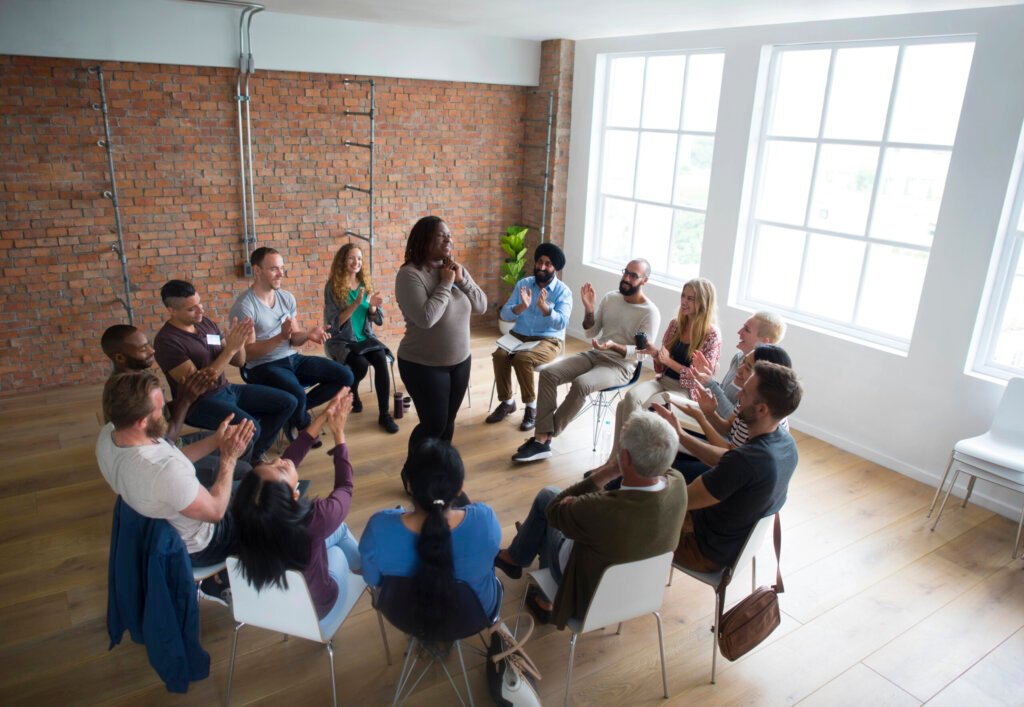
The result is a culture that increasingly knows how to debate, compete, and defend—but has forgotten how to develop together.
We believe there is another way.
At the Common Ground Institute, we advance a relational approach to human development. Rather than beginning with isolated individuals or abstract collectives, we begin with relationships themselves. Human beings become who they are through participation in relationships—with families, schools, workplaces, communities, and democratic societies.
Freedom matters. Rights matter. Diversity matters. But healthy societies also require something more: responsibility, moral character, compassion, and a willingness to make the well-being of others part of our own.
Our work seeks to cultivate people who ask not only, “What are my rights?” but also, “What do I owe others?” Not only, “How do I get what I need?” but also, “How can we create solutions that meet your needs as well as mine?”
This is the heart of relationalism.
Relationalism recognizes that conflict is neither an obstacle to development nor something to be avoided. Conflict reveals unmet needs, competing values, and opportunities for growth. When approached collaboratively, conflict becomes one of humanity’s most powerful engines of creativity, innovation, intimacy, and social progress.
For this reason, CGI teaches methods of collaborative problem solving that transform conflict into opportunities for shared development.
Our work spans many settings.
In organizations, we help leaders build cultures where disagreement becomes a source of innovation rather than division. We teach collaborative leadership, conflict management, and guided organizational development so that competing interests become opportunities for stronger, more adaptive organizations.
In education, we help teachers create relational classrooms where learning emerges through guided participation, trust, and developmental support. We cultivate schools where behavior, conflict, and academic growth are addressed through relationships rather than coercion alone.
In families and intimate relationships, we help people replace cycles of argument with collaborative dialogue. Rather than winning conflicts, couples learn to hear one another’s needs, cultivate compassion, and create new ways of living together that strengthen both partners.
In communities, we help citizens, organizations, and public leaders solve shared problems through collaborative democracy. Instead of treating democracy as a perpetual contest between opposing camps, we foster processes that enable diverse people to build common ground while respecting genuine differences.
Underlying all of this is a broader vision of human flourishing.
We believe people develop best when they participate in relationships characterized by respect, responsibility, compassion, shared purpose, and continual growth. Strong communities are built by people who recognize that their own well-being is inseparable from the well-being of others. Healthy organizations emerge when differences become resources rather than threats. Democratic societies flourish when citizens learn not merely to defeat opponents, but to solve problems together.
Our mission is not simply to reduce conflict. It is to cultivate a relational way of being in the world.
A world in which people increasingly see one another not as obstacles to overcome, identities to defend against, or competitors to defeat, but as partners in the shared work of human development.
Because relationships change people.
And by transforming relationships, we can transform organizations, communities, and ultimately, the world.
Ready to Begin?
Whether you’re looking for a keynote speaker, an executive advisor, a school partner, a community facilitator, or a long-term learning partner, we’d love to explore how Common Ground Institute can help. Fill out the form below and we’ll be in touch.
Sign up for our newsletter